If you’ve ever walked through a manufacturing floor—whether it’s a automotive shop, a aerospace workshop, or even a heavy equipment facility—you’ve probably seen two core processes side by side: forging and machining. Most people I talk to just see “metal parts being made” and don’t stop to connect how the first step (forging) straight up changes everything about the second step (machining) when you’re on the shop floor. As a forging part machining supplier, I’ve seen the difference a poorly done forge makes vs. a tight, intentional one—firsthand, no PowerPoint slides required. I’m gonna break this down like I would with a new machinist on the day shift, no jargon dumps, just real stuff that hits our budget, our timeline, and how good the final part actually works. Forging Part Machining
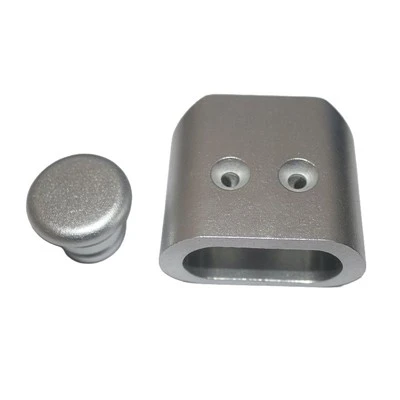
Let’s start with the basics: Forging is that process where you heat a metal billet (like a solid chunk of steel, aluminum, or even titanium) to near its melting point, then hit it with a press or hammer to smash it into a rough shape called a forging blank. Machining is when you cut, drill, mill, or grind that blank into the exact final part—like a crankshaft, a bracket, or a gear tooth. The gap between these two steps is where 80% of our headaches (and wins) happen. I’ve had a client bring in a forging blank that was so warped from the hammer strike, our first 3 machining setups threw 12 parts before we even touched the feature they needed. And I’ve had a forge shop partner where every blank came in dead straight, required 20% less tooling, and we finished their order 3 days early. It’s not rocket science, but it’s way more dependent on the forge’s little choices than most design engineers realize.
First big thing: The grain structure from forging. When you smash hot metal, you’re not just reshaping it—you’re aligning the metal’s microscopic “grain lines” like wood grain. A good forging will run those lines along the part’s stress points, which makes the part way stronger than a cast one (that’s why aerospace and truck manufacturers swear by forgings). But here’s the machining kicker: If the forge messes up the grain alignment, machining becomes a nightmare. I once worked on a set of engine connecting rods where the forging shop had hammered the grain lines across the big end (the part that bolts to the crank). When we drilled the oil hole through the big end, the drill bit hit a cross-grain and grabbed—snapped the bit clean in half, and scarred 4 connecting rods before we caught it. We had to send those back, reforge ’em, wait 2 weeks, and the client was pissed. A properly forged connecting rod has grain lines running straight through the big end and small end, so drilling that oil hole is smooth, no snags, no broken tools. It’s not just about the grain being aligned—it’s about how the tool interacts with that grain. Cross-grain machining causes uneven tool wear, chatter (that high-pitched shake that makes a wobbly part), and even tiny micro-cracks in the part that fail later. That’s the kind of stuff that doesn’t show up on a forging report, but you feel it in your tool bills.
Next: Surface finish of the forging blank. When you forge metal, it leaves a “forge scale” on the surface—that hard, crusty oxide layer that flakes off if you tap it. A lot of forge shops just let this scale sit, right? Because it comes off after machining anyway. But here’s the thing: That scale is like sandpaper glued to the part. If you try to mill or turn a forging with scale still on it, your cutting tool doesn’t cut metal—it grinds through scale and tool at the same time. We’ve seen tool life drop by 60% on parts where the forge didn’t blast off the scale first. I calculated that last year: For a $12,000 order, bad forge scale cost us $1,800 in extra inserts, plus 2 extra hours of machine time, pushing the delivery date back 2 days. On the flip side, a good forge will send the blank through a vibratory tumbler or a acid etch (mild, not the harsh kind) to strip the scale before it leaves their shop. That lets us grip the part in the vise (another win—no slipping mid-machining) and start cutting directly, no pre-step to grind off scale. Some of the newer forge shops even do a “pre-machining” light cut on the blank to remove any high spots, but even just removing the scale makes a huge difference.
Then there’s dimensional consistency of the forging. Let’s say you order 100 forging blanks for a bracket that’s supposed to be 5mm thick. If the forge shop is off, and half the blanks are 5.2mm and half are 4.8mm, you can’t just machine them all the same. The 5.2mm ones will require less material removal, so we have to adjust the tool path for each one—if we don’t, we’ll over-cut and make a thin, weak bracket. The 4.8mm ones might even be too thin already, so they get scrapped before machining. I once had a client whose previous forge shop had a 1mm tolerance on blank thickness. We got their first batch, and 22 out of 200 blanks were outside the 0.5mm minimum thickness we needed—wasted 3 hours sorting them, and 11 parts ended up being scrap. When we switched ’em to a different forge that holds a 0.2mm tolerance, those 200 blanks? Only 1 scrap, sorted in 10 minutes. That consistency doesn’t just save machine time—it cuts down on part scrap, which cuts down on their costs too. The key here is that forging tolerance directly translates to machining setup time. Every time we have to adjust a tool offset because a blank is slightly bigger or smaller, that’s time we’re not producing good parts. For a high-volume order, that adds up to days of extra work.
Wait, let’s not skip over a super common thing: Forging distortion. When you heat metal up and then cool it, it shrinks—but not evenly. A forge that uses the right cooling rate (slow for big parts, fast for small ones) will have a blank that’s almost perfectly straight. A bad forge might cool it too fast, making the blank bow like a banana. We once got a set of large suspension brackets for a semi-truck that were so warped, we couldn’t clamp ’em tight in our CNC mill. We tried 3 different vises, shimmed every gap, and still the part shook when we tried to machine the mounting holes. We ended up having to send them to a secondary straightening operation, which added $8 per part and 10 days to delivery. The client wasn’t happy, and we lost a potential repeat order because of it. A properly forged blank will have almost zero distortion—we can clamp it once, run the whole program, and never have to stop to check for warpage. That’s the kind of reliability that makes a client stick with you.
Now, what about when the forging and machining are done at the same shop? I’ve worked with a few shops that do both, and the best part is that the forge team will adjust their process based on what we need for machining. For example, if we’re machining a part with a lot of small holes, the forge team will leave a little extra material around those hole locations so we don’t have to drill through a hard, uneven surface. If we’re machining a part that needs to be super smooth, they’ll leave a slightly thinner scale layer so we only need one light cut instead of two. It’s a feedback loop, basically. When the forge and machining teams talk, not just pass blanks off over a counter, the whole process gets way better. I’ve seen that with a steel housing part we make: when the forge team heard we were having trouble with tool life on the curved surface, they adjusted their hammer strike to make the curved blank a tiny bit flatter, so our end mill didn’t have to work as hard. Tool life went up 25%, and we finished the order a day early. That’s the stuff no textbook tells you— it’s just knowing how one step affects the next.
Let’s get real about costs, because that’s what everyone cares about. A lot of engineers think, “Forging is cheaper than machining, so I just pick a forge and go.” But if your forging process adds 20% more machining time, 30% more tool costs, and 5% more part scrap, that “cheap” forge is actually way more expensive in the long run. I’ve crunched the numbers for a aluminum truck part: A forge that has loose tolerances cost the client $1.20 per part in machining costs (extra tooling, extra time, scrap). A forge that’s precise cost $0.75 per part. So for 10,000 parts, that’s $12,000 vs. $7,500. That’s a $4,500 difference—just from how the forge does its job. No one tells you that, but it’s the truth on the shop floor.
Another thing: Material type. It’s not just steel. For aluminum, forging is way different than for steel, and it affects machining even more. Aluminum forgings have a softer grain, so cross-grain machining is even more likely to cause chatter. Titanium? Super strong, super expensive. A bad titanium forging will have hard inclusions in the metal, and when your drill hits that, it snaps instantly—you just lost a $50 drill bit and a $200 blank. I once had a titanium bracket for a drone where the forge had left a tiny inclusion, and our drill snapped, left a hole that was off-center. That part was gone, and we had to wait 3 weeks for a new titanium blank. For exotic materials like titanium or Inconel, the forging process is make-or-break for machining. Mess up the grain or surface, and you’re not just wasting money—you’re missing deadlines, which can kill a project.
Wait, let’s cover what actually makes a forge good for machining, so if you’re an engineer reading this, you know what to look for. First, ask for their forging tolerance specs. If they can’t hold ±0.2mm for a blank, run. Second, ask if they remove forge scale before sending blanks. If they don’t, add 20% to your machining tool budget. Third, ask if they test the grain structure—even a simple ultrasound check to make sure grain is aligned right. Fourth, if the forge is local (within 2 hours drive), that’s a win—you can drive over, see their process, talk to the hammer operator, and fix small issues before they become big problems. I’ve fixed so many little issues by just walking over to the forge shop at 7 a.m. and saying, “Hey, that blank’s warped—can we adjust the cooling rate?” instead of shipping a bad batch back.
At the end of the day, the forging process is the foundation of your machined part. A great forge makes machining faster, cheaper, and produces a better, stronger final part. A bad forge makes machining a nightmare, costs you more, and can lead to parts that fail early. As a forging part machining supplier, we don’t just take blanks and cut ’em—we work with forge shops to make sure every blank comes in ready to machine. We talk to their teams, adjust processes on both sides, and keep our machining costs low so you get a great part at a fair price.
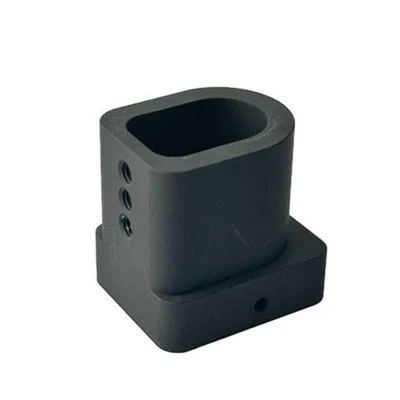
If you’re in the market for forging parts and need a machining partner that knows how to navigate the link between forging and machining, hit us up. We can walk you through our processes, show you examples of how we’ve fixed bad forging issues for past clients, and get you a quote that makes sense for your project. No runaround, no fine print—just real shop floor stuff that works.
High Quality Machining Service References
- Kalpakjian, S., & Schmid, S. R. (2021). Manufacturing Processes for Engineering Materials. Pearson Education.
- Diamond, S. L. (2019). Forging and Machining Interactions in Metal Fabrication. Journal of Manufacturing Science and Engineering, 141(8), 081005.
- ASM International. (2020). Forging Fundamentals: Grain Structure and Machinability. ASM Handbook, Volume 14: Metalworking: Sheet Forming, 2nd Ed.
Ningbo Yirui Machinery Manufacturing Co., Ltd.
As one of the most professional forging part machining manufacturers and suppliers in China, we’re featured by quality products and good price. Please rest assured to wholesale durable forging part machining made in China here from our factory. Customized orders are welcome.
Address: No.107, Wanzhong Village, Jishigang Town, Haishu District, Ningbo City
E-mail: James.he@yiruitek.com
WebSite: https://www.yiruime.com/
