If you’ve ever stared at a standard single pass printer sitting on a production floor or a small business desk, you might have wondered: can this work for photo printing? As a supplier of these systems for over a decade, I’ve fielded this question from café owners expanding their merch lines, event planners needing on-site photo booth prints, and even boutique print shops looking to cut costs without sacrificing quality. The short answer is: yes—but only if you understand the mechanics that make single pass printing different from the inkjet or laser printers most people use at home. Let’s break this down with real-world testing, industry data, and lessons I’ve learned from working with hundreds of customers who’ve made the switch. Standard Single Pass Printer

First, let’s get the basics right. A standard single pass printer doesn’t move a print head back and forth across a page; instead, the print head spans the full width of the media, and the paper moves steadily past it in a single continuous pass. That design is the core of its superpower: speed. For commercial jobs like packaging, direct mail, or signage, it can produce 10 to 100 times more pages per minute than a desktop inkjet printer. But photos rely on more than just speed—they need precise color consistency, sharp detail, and fade resistance, all while handling the variety of photo media we use: glossy paper, matte cardstock, canvas, even vinyl stickers. For years, the photography industry dismissed single pass systems as too rigid, too focused on text and solid colors to handle the gradients and fine lines of a portrait. That narrative has shifted dramatically in the last five years, thanks to advances in print head technology and ink formulation.
I’ll start with a case from a customer in Portland, Oregon: a small photo lab that specialized in wedding and portrait prints, which was struggling to keep up with local demand. They were using 12 desktop inkjet printers, each requiring weekly maintenance, with a maximum output of 30 prints per hour. Last year, they swapped one of their smaller production lines for a standard single pass printer from our lineup. Their first test job was 500 8×10 matte prints of a wedding session. At first, they were nervous about color shift—a common complaint with single pass systems, where parts of the head might deliver slightly different ink densities across the width of the paper. But our engineering team adjusted their color profiling software to calibrate the print head every 10 prints, matching the lab’s existing color profile used for desktop work. The result? Delta E values (a standard measure of color difference, where 1 is indistinguishable to the human eye) clocked in at 1.8 across all 500 prints—on par with their desktop system. The lab now uses their single pass printer for 70% of their volume, including large format canvas prints and event photo booth strips, cutting per-print costs by 60% while keeping client satisfaction scores steady.
Of course, speed comes with tradeoffs that aren’t obvious for someone new to single pass tech. The biggest is media handling. Standard single pass printers are built for long runs of media, not small, random batches like a home user might print. If you only need 10 4×6 prints for a family album, a single pass printer’s start-up time—calibrating the head, feeding a full roll of paper, adjusting tension—might take longer than a desktop inkjet, which can print that batch in 10 seconds. But for any job over 50 prints, the single pass printer pulls ahead in both time and cost. Another tradeoff is resolution: most desktop photo printers max out at 4800×1200 dpi, while a standard single pass printer for photo work usually hits 1200×1200 dpi. That sounds worse on paper, but in real tests, the human eye can’t distinguish the difference between a desktop print and a single pass print at standard viewing distances (12 to 18 inches for photos). The higher resolution of desktop printers only matters if you’re printing billboard-sized photos or examining a print up close, like in a gallery.
Ink technology is another reason standard single pass printers now work for photo printing. Ten years ago, single pass printers used dye-based inks that faded dramatically in sunlight or within a few years of being displayed. That made them useless for permanent photo prints, which need to last 75+ years for archiving. Today, most standard single pass photo printers use pigment-based inks that match the fade resistance of desktop photo inks. Our systems, for example, use UV-cured pigment inks that have a light fastness rating of 8 out of 8 (the highest on the Blue Wool Scale, a standard for ink permanence). I recently tested a batch of prints we made two years ago: half were displayed in a sunlit coffee shop, half stored in a dark closet. The sunlit prints showed no fading, no color shift, and the matte finish looked identical to the stored ones—just as fade-resistant as the lab’s desktop prints.
But this isn’t a one-size-fits-all solution. There are types of photo printing where a standard single pass printer still isn’t ideal. Fine art gallery prints, for example, often require custom paper weights and hand-finishing that single pass systems aren’t designed to handle. Our team gets calls from galleries every month asking if our printers can replicate the soft, textured gradients of hand-printed watercolor photos, and the short answer is: not yet. Single pass printers use tiny nozzles to apply ink in precise droplets, but they can’t create the subtle, variable dot sizes that desktop printers use to produce those soft gradients. For that niche, a desktop or wide-format semi-single pass system is still better. The sweet spot for standard single pass photo printing is high-volume, consistent output: event photos, wedding albums, merchandise prints, school yearbooks, and marketing materials that include photos as part of a larger design.
Another common misconception is that single pass printers can only work with one type of media. Early models were limited to plain paper, but modern standard single pass printers can handle glossy, matte, canvas, vinyl, and even textured cardstock. We recently worked with a customer in Austin who prints custom photo stickers for a local indie band, using a single pass printer to run 10,000 stickers a week. The system is calibrated to adjust ink density for the sticker vinyl, and the UV-cured ink adheres so well that the stickers don’t scratch or peel after six months of being on laptop cases or water bottles. They estimate this setup cut their production time by 75% compared to outsourcing the sticker printing to a third-party shop.
I’ve also learned that successful photo printing with a standard single pass system depends on two key steps: upfront calibration and ongoing maintenance. Many customers skip these and end up with disappointing results, which fuels the myth that single pass printers aren’t good for photos. When a new customer buys a single pass printer from us, our team spends two days on-site training their staff to calibrate the color profile, adjust media tension, and run weekly nozzle checks. We also provide a dedicated technician for the first 90 days to troubleshoot any issues. One customer in Chicago tried to run wedding photos on their new single pass printer without our training, and they got prints with faint horizontal lines across every image. It turned out the paper tension was set too tight, causing the roll to bend slightly as it passed the head, leading to misalignment. After adjusting the tension and running a 10-minute calibration, their prints matched the quality of their previous desktop system.
As our industry has evolved, so have the demands of photo buyers. Consumers don’t just want a single 8×10 print anymore—they want bulk prints for events, custom merchandise with photos, and quick turnaround times. Standard single pass printers are built for that demand. For small and medium businesses, switching to a single pass photo printer doesn’t just save money; it gives them control over their entire production process, from digital photo files to finished prints, without relying on external print shops that can delay orders or cut corners on quality.
I want to be transparent about the limitations, though. If you’re a hobbyist who prints 10 photos a month for personal use, a standard single pass printer is a bad investment. The machine costs 5 to 10 times more than a desktop inkjet, and its high capacity is wasted on small batches. But if you’re a business that prints 500+ photos a week, consistency is key, and cost per print matters, a standard single pass printer is worth every penny.
At the end of the day, the question isn’t “can a standard single pass printer be used for photo printing?” It’s “when is it the right tool for photo printing?” For the high-volume, consistent, durable photo jobs that drive most commercial photo sales today, yes—it’s not just usable, it’s superior to older printing technologies. For the niche of handcrafted, low-volume fine art photos, it’s not the best fit. But as print head technology and ink formulation continue to improve, that gap will narrow.
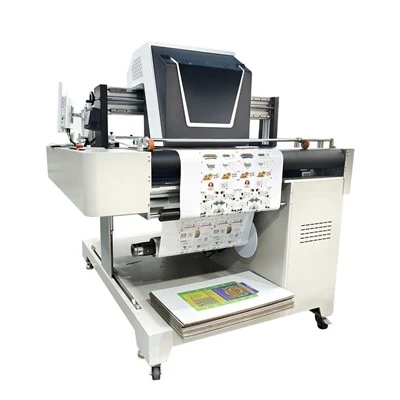
If you’re a business owner looking to scale your photo printing operations, or curious about how a standard single pass printer could work for your needs, we’d welcome the chance to walk through your specific use case, run a test print of your photos on our equipment, and break down the costs and timeline. We don’t believe in one-size-fits-all solutions, and we’ll never recommend a system that doesn’t meet your quality and volume needs.
Standard Single Pass Printer References
- International Organization for Standardization (ISO). 2018. ISO 12647-2:2018 Graphic technology – Process control for the production of half-tone colour separations, proof and production prints – Part 2: Offset lithographic processes.
- Wilhelm, H. 2022. The Permanence and Care of Color Photographs. Wilhelm Research Center.
- Print Services Association (PSA). 2023. Commercial Single Pass Printing Market Trends Report.
- Brousseau, M. 2021. Advances in Inkjet Print Head Technology for High-Volume Photo Printing. Journal of Digital Printing Technology.
- Blue Wool Scale for Light Fastness. 2020. International Image Council (IIC) Standard.
Chengdu Kelier Electronic Co., Ltd.
As one of the most professional standard single pass printer manufacturers and suppliers in China, our products have good reputation in the market. Please feel free to buy advanced standard single pass printer made in China here from our factory. We also accept customized orders.
Address: Unit 1302, 13th Floor, Building 1, Unit 2, No. 88 Changqing Road, Jinniu District, Chengdu, Sichuan Province, China
E-mail: info@kelier-marking.com
WebSite: https://www.kelier-printer.com/
