If you’ve ever had to work on a piece of heavy machinery—whether a farm tractor at harvest time, a construction excavator digging a foundation, or a hydraulic press in a manufacturing shop—you’ve probably wrestled with quick couplings. Those little, seemingly simple connectors are the unsung heroes of hydraulic systems, letting you switch out tools, hoses, and attachments in seconds instead of spending minutes fumbling with threaded fittings. But for anyone buying these parts for their operation, one question comes up again and again: what is the flow rate of hydraulic quick couplings, and does it matter for my setup? Hydraulic Quick Couplings
As a supplier who’s worked with hundreds of operators over the years, I’ll cut to the chase: flow rate isn’t just a random number on a spec sheet. It’s the difference between a hydraulic system that runs smooth and one that sputters, overheats, or simply doesn’t have the power it needs to do the job. Let’s break this down, no jargon overload, just real-world context that I’ve learned from sitting across from workshop managers and equipment operators at their jobsites.
First, let’s define what flow rate actually means in this context. For hydraulic quick couplings, flow rate is the volume of hydraulic fluid that can pass through the coupling in a given period, usually measured in gallons per minute (GPM) or liters per minute (LPM). But here’s the thing: it’s not a fixed value. A lot of factors shape it, and I’ve seen operators misread spec sheets before, thinking a higher GPM is always better. That’s not true. Too much flow can cause excessive pressure drop, which wastes energy and leads to heat buildup. Too little, and your system can’t generate enough force to lift a pallet, drive a hammer, or spin a hydraulic motor.
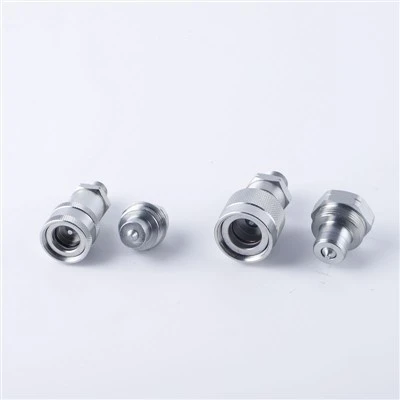
Let’s start with the basic design of a quick coupling, because that’s where flow rate starts. Most standard hydraulic quick couplings are two-piece sets: a plug (the male end) and a coupler (the female end). When disconnected, both ends have poppet valves that seal off the fluid line to prevent leaks and contamination. When connected, those valves open, letting fluid flow through. The size and shape of the fluid passage inside those parts is the biggest factor in flow rate. For example, a 3/8-inch coupling has a different internal diameter than a 1/2-inch one, so it can move more fluid. But it’s not just the outer size—some brands design their couplings with rounded internal passages instead of sharp corners, which reduce turbulence and let fluid move more freely. I’ve seen budget couplings with tiny, pinched internal passages that claim the same GPM as a premium brand with a wider bore, but in real use, the budget ones can’t keep up. Contamination from that narrow passage also builds up faster, leading to leaks and failure sooner.
Another key factor is pressure rating. Flow rate and pressure are linked, but they’re not the same. A coupling rated for higher pressure can usually handle a higher flow rate without damaging the seals or internal parts. If you’re running a high-pressure system (like a hydraulic jack or a demolition hammer), a low-pressure coupling won’t just have a lower flow rate—it could break under pressure, leading to a dangerous fluid spray or equipment damage. I once had a customer who tried to use a low-cost coupling from a hardware store on their excavator’s breaker attachment. The flow rate was too low, so the breaker barely worked, and after a week, the coupling’s poppet valve cracked under pressure. It cost them three days of downtime and more than twice the price of a proper coupling to fix. That’s the kind of story I hear all the time, and it’s why I always tell customers to match the coupling’s pressure rating to their system’s maximum pressure, and check flow rate alongside it.
Turbulence and pressure drop are also part of the equation. When fluid moves through a coupling, it creates friction against the inside walls. That friction causes pressure drop—the difference in pressure between the inlet (where fluid comes from the pump) and the outlet (where it goes to the tool). A good quick coupling will minimize pressure drop, so most of the pump’s pressure actually gets to the work tool. A bad one can drop pressure by 10% or more, which is a huge deal for high-demand applications. For example, a hydraulic log splitter needs at least 12 GPM to generate enough force to split a hardwood log. If your coupling has a pressure drop that cuts your effective flow to 10 GPM, you’ll be spending twice as much time splitting logs, and the pump will work harder to compensate, leading to higher energy costs and faster wear.
Now, let’s talk about how to pick the right flow rate for your specific setup. This isn’t a one-size-fits-all answer, but from what I’ve seen working with different industries, here are the common use cases:
- Small, low-power tools (like hydraulic grease guns, small pumps, or garden equipment): These usually need flow rates between 1 and 5 GPM. For these, compact, low-pressure couplings are fine, as long as their flow rate matches the tool’s requirement.
- Medium-duty equipment (like forklifts, small excavators, or agricultural loaders): These typically run at 5 to 15 GPM. This is where you start to see the difference between budget and premium couplings—premium ones maintain flow rates closer to their rated value, even under repeated connection and disconnection.
- High-power industrial equipment (like construction breakers, large agricultural harvesters, or hydraulic presses): These need flow rates of 15 GPM and up, sometimes 30 GPM or more. For these, you can’t cut corners: you need couplings designed for high flow, large internal passages, and heavy-duty seals to handle constant high-pressure flow.
Wait, but what about how connection style affects flow rate? There are two main types of quick couplings: push-to-connect (also called straight-thru) and flat-face. Flat-face couplings are super popular now because they reduce spillage when disconnecting, which is a big plus for keeping hydraulic fluid clean and jobsites safe. But I’ve had customers ask: do flat-face couplings have the same flow rate as standard push-to-connect? The short answer is, it depends on the brand. Some flat-face couplings have a slightly smaller internal passage to house the poppet valve, which can lead to a minor flow reduction. But good manufacturers design their flat-face couplings to minimize that difference, so the flow rate is almost the same as a standard coupling. The trade-off for that tiny flow difference is worth it for most operations, because less fluid spill means less mess, less waste, and less risk of damaging the hydraulic system from contamination.
Another thing I wish more people understood: flow rate isn’t just about the coupling. It’s tied to the rest of your hydraulic system. If your pump only outputs 10 GPM, buying a coupling rated for 20 GPM won’t do anything to make your tool faster. The flow rate is only as good as the weakest link in the line: the pump, the hoses, the valves, and the coupling. So when you’re sizing a coupling, always check the pump’s flow rate first, then pick a coupling that can handle at least that, with a little buffer for safety. That buffer is important—if your system runs at 10 GPM, a coupling rated for 10 GPM is okay, but one rated for 12 or 15 GPM will have less pressure drop, run cooler, and last longer.
I’ve also seen a lot of operators test flow rate wrong. A common mistake is testing flow rate with the coupling disconnected, but that doesn’t tell you anything about the real-world performance. When the coupling is connected, the two poppet valves have to open, and the two internal passages have to align, which can add a small amount of restriction. The only way to get an accurate measurement is to test the coupling under load, connected to a hydraulic system at its operating pressure. That’s why reputable suppliers like us provide real-world flow rate data, not just theoretical numbers. We test every batch of couplings to make sure their actual flow rate matches what we list, so our customers don’t get a surprise when they install them on their equipment.
What about wear and tear on flow rate? Even the best couplings will wear out over time, and that will lower their flow rate. The poppet valves can get scratched, the internal passages can accumulate grime from hydraulic fluid, and the seals can degrade, leading to partial blockages. I recommend checking your couplings’ flow rate every 6 to 12 months, depending on how often you use them. If you notice your equipment is running slower, or the pump is making more noise than usual, that’s a sign your coupling’s flow rate has dropped, and it’s probably time to replace it. Waiting too long can lead to more serious problems, like overheating the hydraulic fluid, which can damage seals, hoses, and even the pump.
Now, let’s talk about a common question I get: can I mix couplings from different brands? For example, if I have a coupler from Brand A and a plug from Brand B, will that work, and what happens to the flow rate? The short answer is, sometimes it works, but often it doesn’t, and the flow rate will be lower. Each brand designs its couplings with slightly different internal dimensions, so the plug and coupler might not align perfectly, creating a narrow point in the passage that restricts flow. I had a customer who tried to mix a cheap plug from a discount site with our coupler, and their flow rate dropped by 4 GPM. They thought our coupler was bad, but it turned out the mismatched parts were the issue. So when replacing parts, it’s always best to stick with the same brand, or check compatibility charts to make sure the plug and coupler are designed to work together.
Let’s wrap this up with a real example from last year. We had a customer who runs a fleet of 12 small excavators for residential construction. They were using a budget brand of quick couplings, and their operators were complaining that the hydraulic breaker attachments were too slow, leading to missed deadlines. After we tested their setup, we found that the budget couplings had a flow rate of 10 GPM, but their excavator’s pump was putting out 14 GPM. The 4 GPM loss from the coupling meant the breaker was only getting 10 GPM, so it took twice as long to break concrete. We recommended switching to our heavy-duty couplings, which have a 15 GPM flow rate and a much lower pressure drop. After they made the switch, their attachment speed went up by 40%, and they cut their project time by an average of two days per machine. That’s the impact getting the right flow rate makes.
If you’re reading this and still not sure what flow rate your hydraulic quick couplings need, don’t guess. Every application is unique, and there’s no substitute for working with someone who knows the equipment. Whether you’re a small farm owner looking to replace a couple of couplings, or a large construction company outfitting an entire fleet, we can help you figure out the right flow rate, pressure rating, and style for your needs. We don’t just sell parts—we work with you to make sure your hydraulic system runs at its best, no downtime, no wasted money.
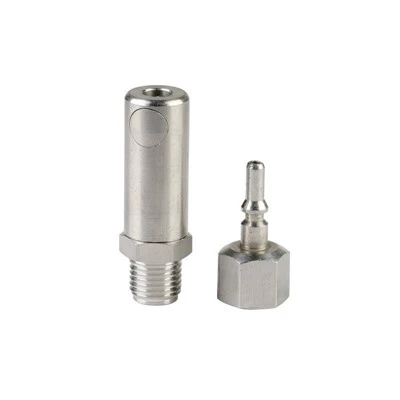
Pneumatic Quick Couplings If you’re ready to get the right hydraulic quick couplings for your operation, reach out to us to discuss your specific setup, pump specs, and application needs. We can walk you through the options, share real performance data, and help you pick a solution that fits your budget and keeps your equipment running smoothly.
References
- Hydraulic Quick Coupling Design Standards, International Organization for Standardization (ISO 4414:2019)
- Hydraulic System Flow Dynamics, Society of Automotive Engineers (SAE J1014:2020)
- Heavy Equipment Hydraulic Component Performance Guide, Construction Equipment Association (CEA 2022)
- Fluid Power Contamination Control Best Practices, National Fluid Power Association (NFPA T3.6.7:2021)
Cixi Poolke Hydraulic Pneumatic Co., Ltd.
Cixi Poolke Hydraulic Pneumatic Co., Ltd. is one of the most professional hydraulic quick couplings manufacturers and suppliers in China, also supports customized service. Please feel free to wholesale the newest hydraulic quick couplings made in China here from our factory. Quality products and reasonable price are available.
Address: #88 Zhengtong Road, Kandun Industrial Park315303, Cixi, Zhejiang, China
E-mail: contact@poolke.com
WebSite: https://www.poolkecouplings.com/
