When I first started in the fluid handling equipment business 12 years ago, I thought telling a piston pump and a diaphragm pump apart would be straightforward. After all, both move liquids, right? I’ve since learned that the devil is in the details—and that mix-ups between these two pumps have cost small fabricators, food processing plants, and even wastewater treatment teams hundreds of hours of downtime and thousands of dollars in wasted material. As a piston pump supplier, I don’t want to oversell my side— I’ve seen diaphragm pumps work wonders where piston pumps would fail, and vice versa. But I also know there’s a lot of misinformation out there, especially for teams that only order pumps once every few years and don’t have the time to deep-dive into specs. Let’s break this down like I’d do over a cup of coffee with a new customer who’s staring at two identical-looking pump models on a spec sheet, trying to figure out which one they actually need. Piston
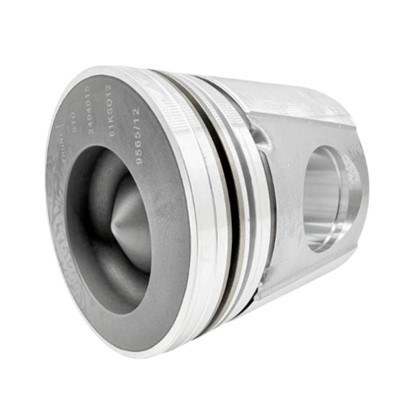
First, let’s get the basic mechanism straight, because that’s where every difference starts. A piston pump works on old-school positive displacement: you have a cylindrical piston inside a tight-fitting cylinder liner, right? When the piston moves forward, it displaces a set volume of liquid—no ifs, ands, or buts. The pump has intake and outlet valves that open and close with each stroke, so liquid comes in on the piston’s backstroke and gets pushed out on the forward stroke. I remember the first custom piston pump we built back in 2014 for a metal stamping shop that needed precise coolant delivery for their 100-ton press. The shop’s old pump was a generic diaphragm model that would pulse so unevenly, it would leave streaks on the stamped aluminum parts, forcing them to rework 15% of their output each shift. They swapped to our heavy-duty piston pump, and that rework rate dropped to less than 2%—all because the piston’s tight fit gives consistent, per-stroke volume.
Diaphragm pumps, on the other hand, use a flexible diaphragm instead of a piston. That diaphragm expands and contracts, usually driven by a mechanical arm or compressed air, to create a vacuum that pulls liquid in and pushes it out. I’ve sold a handful of diaphragm pumps over the years—mostly to food and beverage customers handling sensitive items like fruit puree, where even a tiny metal particle would ruin a batch. The flexibility of the diaphragm means there’s no metal part that touches the liquid, so that’s a big plus for contamination-prone materials. But here’s the thing: that flexibility also limits how much pressure a diaphragm pump can handle, especially with thick, viscous fluids. I once had a customer with a concrete mixing operation try a diaphragm pump to move grout at 80 PSI, and the diaphragm tore through in three days. He swapped to our heavy-duty piston pump, which handles up to 1,500 PSI consistently, and that pump’s still running 7 years later with only a liner replacement.
Next, let’s talk about pressure and flow consistency—this is where so many customers get tripped up. Piston pumps deliver what’s called “positive displacement with fixed volume per stroke,” which means the flow rate is directly tied to how fast the piston moves. If you adjust the motor to spin faster, the piston strokes more times per minute, so flow goes up; slow it down, flow drops. The pressure stays steady as long as the system doesn’t have unexpected blockages, because the piston’s rigid push means it doesn’t give way. That makes piston pumps ideal for applications that need precise dosing, or high-pressure transfer—like the metal stamping shop I mentioned, or even hydraulic systems, where pressure fluctuations can damage machinery.
Diaphragm pumps have a much more variable flow rate, because the diaphragm’s flexibility means it can stretch a little to absorb small pressure changes. That sounds like a good thing, but it means if you need to pump a consistent volume over a long period, diaphragm pumps can drift—sometimes as much as 10% over a 8-hour shift. I had a pharmaceutical customer tell me last year that a diaphragm pump they were using to move vaccine diluents would occasionally deliver too much or too little of the active ingredient, leading to minor dosing errors in their test batches. They switched to our variable-speed piston pump, which lets them dial in exact strokes per minute to hit a 0.5% dosing accuracy target, and they haven’t had a single issue since. Pressure-wise, most standard diaphragm pumps top out around 100 PSI, while our piston pumps start at 500 PSI and go up to 1,500 PSI for heavy industrial applications. If you’re moving thick, high-viscosity fluids like grease, tar, or heavy oils, a diaphragm pump will struggle to build enough pressure to move that material at speed—piston pumps were designed for exactly that.
Now, wear and maintenance costs—this is the part that doesn’t show up on the initial quote, and it’s where the real long-term difference hits. Piston pumps have a few key wear parts: the piston itself, the cylinder liner, and the intake/outlet valves. All of these are metal (usually high-grade cast iron or stainless steel) so they’re durable, but they do wear over time, especially if you’re pumping abrasive fluids like sand mixed with water or metal shavings. The good news is that replacing these parts is straightforward, and our customers often do it themselves during scheduled maintenance—no need for a full pump replacement every few years. I have a regular customer in the mining industry that runs three of our piston pumps 24/7, 365 days a year, pumping slurry mixed with fine copper ore. They replace the piston and liner every 18 months for less than $800 total per pump, which is a fraction of the cost of a new pump.
Diaphragm pumps, by contrast, have the flexible diaphragm as their main wear part. That diaphragm is usually made of rubber or thermoplastic, and it’s prone to tearing, stretching, or degrading over time, especially if you’re pumping hot fluids or abrasive materials. I’ve seen diaphragm pumps go through a new diaphragm every 2-4 weeks in abrasive environments, which adds up fast. The diaphragm itself can cost $300-$500, and then you have to pay a technician to replace it, which takes the pump offline for 2-4 hours. Add that up, and over 5 years, the maintenance cost for a diaphragm pump can be 3-4 times higher than a piston pump for the same application. One of my customers in the pulp and paper industry tried switching to diaphragm pumps for moving pulp sludge, and they were spending $12,000 a year on diaphragm replacements and labor. They swapped to our piston pumps, and now their annual maintenance cost is under $2,500. That’s a no-brainer, right?
But wait—we can’t pretend piston pumps are perfect. There are scenarios where a diaphragm pump is the clear better choice, and as a supplier, I’d never steer a customer wrong by pushing a piston pump where it doesn’t belong. For example, if you’re pumping sensitive, shear-sensitive materials like food puree, yeast, or biological samples, the rigid piston can break down those materials—literally. When a piston moves back and forth, it creates a shearing force that can shred delicate particles, ruining the consistency of food products or damaging biological samples. Diaphragm pumps, with their flexible, non-mechanical pumping action, don’t create that shearing force, so they’re gentler on those materials. Also, if you need a pump that can run dry occasionally (even if you’re not supposed to make a habit of it), diaphragm pumps are better at handling short dry runs without damage. Piston pumps rely on the liquid inside to lubricate the piston and liner, so running dry for even a few minutes can scuff the cylinder or the piston, leading to early wear.
Another key difference is seal design, which ties into contamination risk. Piston pumps use a rod seal to keep liquid from leaking out around the piston rod. These seals are durable, but they can wear over time, and if they fail, you might get a small leak. For most industrial applications, that’s not a big deal—you just replace the seal. But for food processing or pharmaceutical applications, if that seal wears and metal parts come into contact with the food or product, that can cause contamination. That’s why many food-grade piston pumps have secondary seal systems, which add to the cost. Diaphragm pumps, on the other hand, have no external seal— the diaphragm is completely enclosed, so there’s almost no risk of external leakage, and no metal parts touching the liquid. That makes them ideal for applications where zero contamination is non-negotiable. I know a craft brewery that uses diaphragm pumps to move their wort during fermentation, because they don’t want any metal particles or seal residue getting into their beer. That’s a valid call, and I don’t blame them for it.
So let’s wrap this up with a quick decision guide, because that’s what most customers really want. If you’re pumping: high-pressure fluids, thick/viscous materials, abrasive slurries, or need precise dosing and flow control, a piston pump is almost always the right choice. The consistent pressure, high flow range, and low long-term maintenance costs make it the better investment, even if the initial quote is a little higher. If you’re pumping: shear-sensitive food or biological products, need zero contamination risk, or only run low volumes at low pressure, a diaphragm pump is the way to go.

Now, as someone who’s been selling piston pumps for over a decade, I can tell you that I get at least one call a week from someone who bought the wrong pump. They bought a cheap diaphragm pump because it was cheaper upfront, only to deal with constant downtime and replacement costs. Or they bought a generic piston pump that wasn’t built for heavy use, so it broke down after 6 months. Our team doesn’t just sell pumps—we sit down with customers, ask about their application, how much fluid they need to move, what kind of material they’re handling, and how often the pump will run, to make sure they get the right pump for their needs. We offer custom-built piston pumps for specific industries, and we have replacement parts for every model we’ve sold, going back to 2010. If you’re tired of dealing with pump downtime, high maintenance costs, or inconsistent flow, reach out to our team to talk through your requirements. We’ll give you an honest assessment, no hard sell, and help you find the pump that will work for your business for years to come.
DEUTZ Piston References
Pumping Machinery: Positive Displacement Pumps and Performance
Industrial Fluid Handling: Maintenance Best Practices for Piston and Diaphragm Pumps
Food and Beverage Pumping: Contamination Control Standards
Hebei Yuwei Piston Co., Ltd.
As one of the most professional piston manufacturers and suppliers in China, we’re featured by quality products and good service. Please rest assured to buy customized piston made in China here from our factory. Also, quotation is available.
Address: Beizhujiacun Village, Sujiuzhuang Town, Ningjin County, Xingtai City, Hebei Province
E-mail: jack@ywpiston.com
WebSite: https://www.ywpiston.com/
