Hey there, if you’ve ever worked with acoustic panels, ventilation grilles, or even the sleek metal covers for modern electronics, you’ve probably come across micro perforated metal—aka MPM for short. As a supplier who’s been in this game for years, one of the first questions people shoot my way is always, “Wait, what’s the thickness range for micro perforated metal?” It’s a fair question, because MPM isn’t your average sheet metal—get the thickness wrong, and you’re looking at stuff that either doesn’t perforate cleanly, bends too easy, or can’t hold up to whatever it’s going into. Let’s break this down, no stuffy industry jargon, just straight talk from someone who’s built hundreds of these sheets for clients. Micro Perforated Metal

First, let’s get the basics out of the way: micro perforated metal is thin metal sheets (usually less than 6mm thick) punched or laser-cut with tiny holes—like, holes so small you can barely see ‘em without a magnifier, usually 0.1mm to 5mm in diameter. That tiny hole size is why thickness matters so much here. If the sheet is too thick, you can’t punch a clean micro hole without tearing the metal, right? And if it’s too thin, it’s flimsy—like, it’ll warp if you just hold it wrong, which is a pain for installation.
So what’s the actual thickness range? Let’s start with the low end. Most of the MPM I supply for everyday uses starts around 0.2mm. Wait, that’s super thin—think the thickness of a standard postage stamp, or a piece of office printer paper but metal. Why that low? For things like acoustic face panels, where you want maximum sound absorption and don’t need the sheet to carry much weight. Think about a home theater wall panel: you don’t want a bulky, heavy sheet there, so 0.2mm aluminum or steel works perfect. We even did a run of 0.2mm stainless steel MPM a couple months back for a boutique music studio in Brooklyn—client wanted something that’d stay light enough to mount without extra brackets, and the thin holes let the sound waves pass through easily without bouncing back.
But that’s not the thinnest we do. I’ve had requests for 0.15mm MPM, mostly for small electronics parts—like the vents inside a smart speaker, or the protective grille for a camera lens. Wait, 0.15mm is almost as thin as a credit card. But we only do that for very specific applications, because it’s way more finicky to work with. Punch 0.15mm steel and you’re at risk of the hole edges curling, or the sheet stretching unevenly. Laser cutting 0.15mm aluminum is doable, but you have to dial the laser power way down so you don’t burn through the whole sheet. Most suppliers won’t even touch anything under 0.2mm because it’s just too much of a hassle, but we’ve got the gear to handle it when a client needs it.
Now the upper end. If you’re thinking MPM is always super thin, nope—we go up to around 5mm thick. Wait, 5mm is almost a quarter-inch, that’s way thicker than a lot of people expect. But why would someone want micro perforated holes in a thick sheet? Oh, lots of reasons. Think industrial ventilation grilles—like the ones on a factory exhaust system, or a heavy-duty air filter housing. Those need to be rigid, right? If the sheet was 0.5mm, it’d bang around every time the fan turns on, and the holes would get distorted. 5mm steel MPM is solid, holds up to harsh conditions, and the micro holes are small enough to keep out debris big enough to clog the filter. We did a big order of 4.5mm carbon steel MPM last year for a food processing plant in Texas—they needed something that could stand up to constant moisture and cleaning, and the micro holes kept out food particles without blocking airflow.
But hold on, the upper end isn’t universal. You can’t just take a 5mm sheet and punch 1mm holes in it, right? The ratio of hole diameter to sheet thickness (we call that the “d/t ratio” in the business) matters a lot. For a 5mm sheet, the holes can’t be bigger than like 2mm max, otherwise the sheet will split along the holes. If you have a thicker sheet, you need smaller holes relative to the thickness to keep the sheet’s structural integrity. That’s why most MPM over 3mm thick is only for very specific industrial uses, not for consumer stuff. I’ve seen clients ask for 6mm MPM, but that’s almost unheard of—even for heavy industry, that’s too thick to perforate cleanly, and it adds way too much weight and cost for almost any application.
Wait, let’s make this concrete. Let’s split the range into categories based on what people actually use MPM for, because that’s how most folks shop for it. No need to bore you with general ranges when you can see what works for your project:
-
Consumer & Interior Applications (home theaters, acoustic ceiling tiles, furniture grilles): This is where most of our business is, and the thickness here is almost always 0.2mm to 1.2mm. Why? 0.2mm is super light for mounting on walls, 1.2mm is thick enough to not bend if you’re handling it during installation. For example, a coffee table with a MPM insert to hold magazines? 0.8mm aluminum works perfect—sturdy, doesn’t scratch easily, and the micro holes add a cool modern touch. We use mostly aluminum here because it’s cheap, lightweight, and doesn’t rust, which is great for interior use.
-
Electronics & Automotive Parts: This is where we get into the thinner end (0.15mm to 0.8mm) for small, tight spaces. A car dashboard speaker grille? 0.5mm steel or aluminum, thin enough to fit in the dash without taking up extra room, rigid enough to not rattle. A smart watch’s speaker vent? 0.25mm stainless steel—needs to be thin to fit the small speaker opening, and stainless is scratch-resistant so it holds up to daily wear.
-
Industrial & Heavy-Duty Applications (ventilation, filtering, machinery guards): Here’s where the thicker end comes in, 1.5mm to 5mm. Most of these are carbon steel or galvanized steel, because they’re cheap and tough. A factory’s air intake grille? 2mm galvanized steel—holds up to dust, moisture, and heavy use, the micro holes keep out big debris without blocking airflow. A chemical plant’s protective screen for pumps? 4mm stainless steel—resists corrosion from chemicals, and the micro holes are small enough to keep personnel safe from moving parts.
Now, let’s talk about the exceptions, because there’s always a weird request that breaks the rules. Last year, a client came to us wanting MPM for a museum display case. They needed the sheet to be thick enough to not warp from temperature changes, but thin enough to see artwork through—wait, no, actually the MPM was the frame for the case, with tiny holes to let air circulate and prevent condensation. They wanted 1.8mm acrylic MPM? No, wait, metal—we did 0.3mm copper, which was thicker than the usual thin stuff, but thin enough to work for the display. Another time, a musician wanted MPM for a custom guitar amp grille, and they asked for 0.6mm brass—brass sounds warmer, so it affects the acoustic a little, but the thickness was perfect.
A lot of people mix up micro perforated metal with “perforated metal” in general, which is a different thing. Regular perforated metal usually has holes bigger than 5mm, and thicker sheets—like 10mm or more for security grilles. Micro is all about the small holes, which is why the thickness range is so narrow. If you get into anything thinner than 0.2mm, it’s too flimsy; anything thicker than 5mm, it’s too hard to perforate cleanly, and it’s way more expensive than needed.
Wait, let’s also address a common mistake people make: thinking thicker MPM is always better. No way. If you’re using MPM for acoustic panels, a 2mm thick sheet will block way too much sound, because the holes are too deep relative to the sound waves. The thin sheets (0.2mm to 1mm) let the sound waves pass through the holes easily, which is what makes them great for absorption. If you use a thick sheet there, the sound bounces off instead of going through, so it’s useless for acoustic purposes. That’s why 90% of the acoustic MPM we sell is 0.5mm to 1mm—we once had a client who tried to use a 2mm thick sheet for a home theater panel, and it sounded terrible, so they sent it back and got the right thickness.
How does thickness affect the cost? Let’s be real, you don’t want to go into this blind. Thinner sheets are cheaper per square foot, right? Because less material, and easier to punch or cut. 0.2mm aluminum MPM is about $0.80 a square foot, while 5mm carbon steel is like $12 a square foot. But wait, that’s not the only factor—perforating thinner sheets is slower, because you have to be super careful not to damage them, so sometimes the difference isn’t as big as you’d think. Thicker sheets take longer to process too, because you need more force to punch the holes, so it’s not just material cost. If you need a special thickness, it might cost a little more, but that’s normal for custom orders.
As a supplier, I can tell you that the most common mistake clients make is asking for a thickness that doesn’t fit their application. Like, they’ll come in and say “I want MPM, make it as thick as possible” not realizing that’s going to make it heavy, expensive, and bad for whatever they’re using it for. Or they’ll go too thin, and it warps after a week. That’s why I always ask clients a bunch of questions before I even give a quote: what’s the MPM going to be used for? Where is it installed? What’s the hole size you need? How many square feet do you need? That way, I can tell them the right thickness range, not just the cheapest one or the thickest one.
Wait, let’s wrap this up. To answer the original question: the standard thickness range for micro perforated metal is 0.15mm to 5mm. That’s the sweet spot. Most of what we supply falls between 0.2mm and 1.2mm for everyday uses, and 1.5mm to 5mm for heavy industrial stuff. Anything outside that is either too finicky to work with, or not worth the cost. If you’re working on a project and need MPM, don’t guess on the thickness—reach out, tell me what you’re building, and I’ll help you pick the right stuff. No pressure, just honest advice from someone who’s been doing this for years.
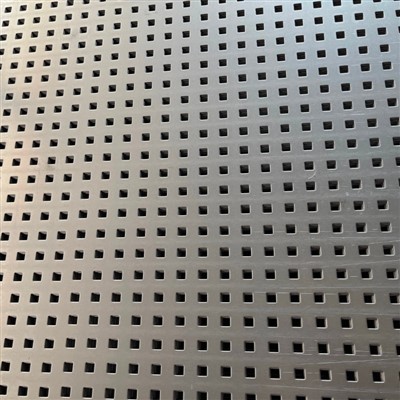
Now, if you’re in need of micro perforated metal for your next project, we’ve got the gear to handle custom thicknesses, hole sizes, and materials. Just shoot over the details of your application, and we’ll get you a quote fast. No hidden fees, no confusing fine print.
Perforated Metal References
- ASM International. (2006). Metals Handbook: Volume 14: Forming and Forging. ASM International.
- Acoustical Society of America. (2018). Sound Absorption Performance of Micro-Perforated Metal Panels. Journal of the Acoustical Society of America, 143(4), 2512-2520.
- Metal Powder Industries Federation. (2020). Micro Perforated Metal: Manufacturing and Applications. MPIF Technical Report Series.
- Engineering Materials Adjective Committee. (2019). Standard Guide for Perforated Metal Sheet Products. ASTM International.
Anping Yilida Metal Wire Mesh Co., Ltd.
Anping Yilida Metal Wire Mesh Co., Ltd. is one of the most reliable micro perforated metal manufacturers and suppliers in China, also supports customized service. Please feel free to buy bulk high quality micro perforated metal made in China here from our factory.
Address: Wire Mesh Development Zone, Anping, Hebei Province, China
E-mail: sales@wiremesh-yg.cn
WebSite: https://www.yilidametal.com/
