If you’ve ever turned on a stovetop burner on a cold morning, cranked up a residential heater, or powered a factory that relies on natural gas to run equipment, you might not stop to think about the hundreds of miles of buried pipes that deliver that fuel from wellheads to your home, office, or industrial site. As a supplier of gas transport pipelines, I’ve spent 12 years talking to operators, engineers, and end users, and one question comes up more than any other: what exact standards define “good” gas for these lines? It’s not a vague, generic “it’s fuel” rule. Get it wrong, and you’re looking at pipeline corrosion, expensive downtime, safety hazards, and even permanent damage to the piping system. Let me break down the real, practical gas quality requirements we live by every day as a pipeline supplier, not just textbook rules. Gas Transport Pipelines
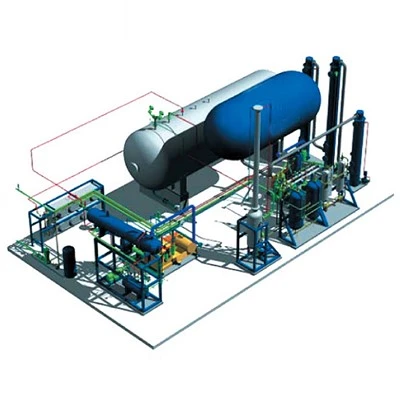
First, let’s start with the core purpose of a gas transport pipeline: it’s designed to move natural gas efficiently and safely over long distances, often across regions with vastly different source gas compositions. The first big requirement is calorific value, or heating content—this is the amount of energy released when a specific volume of gas is burned, and it’s non-negotiable for both end users and pipeline operators. Different regions have different regulatory limits here, but the global standard most North American and international pipelines follow is the ISO 13686 specification, which sets a typical range of 34 to 40 megajoules per cubic meter (MJ/m³) at standard conditions (15°C, 101.325 kPa). Wait, I say “typical” because there’s nuance: if a pipeline is serving a mix of residential and industrial users, the heating value has to stay within a tight window so gas companies don’t overcharge customers for excess energy or shortchange them by delivering low-Btu gas. As a pipeline supplier, we work closely with upstream producers to adjust for this—for example, if gas from a shale well has a higher methane content (which gives a higher Btu) than the pipeline can safely carry, we coordinate blending with fields that have slightly lower-Btu gas to hit that sweet spot. Deviating too much? I’ve seen a local industrial plant in the Midwest reject a pipeline delivery because it came in at 32 MJ/m³, 2 points below the required minimum, costing the operator thousands in reroutes and rushed corrections. That’s the kind of real-world consequence that makes this requirement personal, not just a line in a code.
Next, pipeline integrity depends entirely on two interrelated contaminants: water and solid particulates, which might sound trivial until you understand how they wreck pipelines. Let’s start with water. Natural gas almost always has water vapor in it when it comes out of the ground, and if that vapor condenses in the pipeline, it forms liquid water. Combine that with the gas’s other components—like carbon dioxide, hydrogen sulfide, or even small amounts of nitrogen—and you get corrosive acids that eat away at steel pipes from the inside. The regulatory standard here, from the American Petroleum Institute (API) Spec 1160, mandates a maximum water content that prevents hydrate formation at operating pressures. Hydrates are ice-like crystals that form when water and gas mix under pressure, and they can clog pipelines so completely that entire sections have to be shut down for costly cleaning. We use molecular sieve dryers at every pipeline inlet station we design and install to bring water content down to below 110 milligrams per cubic meter (mg/m³), the threshold where hydrates won’t form at standard transport pressures. A few years back, we had a client in the Gulf Coast skip a standard dehydration step to save on upfront costs, and within 18 months, they had a 2-mile section of pipeline clogged with hydrates and corroded at three points. The repair cost 10 times what that dehydration system would have cost, plus lost revenue from the shut-down period. That’s why water content isn’t a “nice-to-have” – it’s a foundational safety requirement.
Solid particulates are the other major contaminant that we manage rigorously. These are tiny particles of sand, rust, pipe scale, or drilling mud that get carried along with gas during production or processing. Over time, these particles act like sandpaper, wearing down the interior wall of the pipeline, especially at bends, valves, and metering stations where flow changes direction. They also can damage downstream equipment: a gas turbine, for example, has precision blades that can be scratched or clogged by particulates, leading to inefficient operation or failure. ISO 14165, the standard for gas pipeline cleanliness, sets a maximum particulate limit of 5 milligrams per cubic meter, with a particle size cutoff of 10 micrometers—small enough to be dangerous, but large enough to filter out easily. As a pipeline supplier, we integrate high-efficiency coalescing filters and scrubbers at every transfer point and outlet station we build. Last year, a new midstream operator asked us to waive a few filter stages to speed up construction, and we pushed back hard because we knew that over 20 years of pipeline life, even 1 mg/m³ of particulates would cause 15% more wear on the pipe wall. It’s not just about checking a box—it’s about protecting the pipeline’s lifespan, which is typically 30 to 50 years for modern steel lines.
Then there are the toxic and corrosive gas contaminants that are regulated both for safety and environmental reasons. The big ones here are hydrogen sulfide (H₂S), carbon dioxide (CO₂), and total sulfur content. H₂S, often called “sour gas,” is extremely toxic—just 1,000 parts per million (ppm) can kill a human in minutes—and it’s also highly corrosive to steel, especially in the presence of water. API 521 sets a maximum H₂S limit of 4 ppm for pipelines that deliver to end users, and some regions, like Europe under EN 16723, set it even lower at 2 ppm to protect both workers and equipment. We design all our pipelines with corrosion monitoring sensors if they carry gas that even approaches that limit, and we require upstream producers to use amine treaters at the wellhead to strip out excess H₂S before the gas enters the line. CO₂ is less immediately toxic, but it’s corrosive when dissolved in water, and it also lowers the heating value of the gas, which we already care about for end users. The standard maximum CO₂ content is 2% by volume, per ISO 13686. Total sulfur is another one: end users like power plants and refineries have to meet strict emissions limits, so gas transport pipelines can’t carry too much sulfur that would end up in their exhaust. EN 16723 caps total sulfur at 50 mg/m³ for residential gas and 100 mg/m³ for industrial, and we work closely with processing facilities to remove mercaptans (the smelly sulfur compounds we use for leak detection) down to those levels. I once had a client in Italy get fined €200,000 because their pipeline delivered gas with total sulfur 120 mg/m³, which caused the power plant at the end to fail emissions tests. That’s the kind of compliance risk we help our clients avoid by adhering strictly to these limits.
One requirement that people don’t talk about as much, but that’s become more critical as we add renewable gas to transport pipelines, is the absence of contaminants that are harmful to emerging low-carbon fuels. More and more, we’re building pipelines that carry a blend of natural gas and biomethane, or even pure hydrogen in some pilot projects, but those have different quality requirements. For hydrogen transport, for example, we have to ensure no elements that cause hydrogen embrittlement—like certain sulfur compounds or moisture—that make steel pipe crack under pressure. As a pipeline supplier that’s invested in low-carbon transport infrastructure, we’ve updated our specifications to include these new requirements: for hydrogen blends up to 20% by volume, we limit H₂S to 0.1 ppm and water content to below 10 mg/m³, per the new ISO 15916 standard. We also test for oxygen content when we carry biomethane, because oxygen can create explosive mixtures in pipelines, and standard natural gas processing might not remove all of it. A few years ago, we worked on a project in the Netherlands where a biomethane producer accidentally left 3% oxygen in the gas, and we had to install additional nitrogen injection systems at the pipeline inlet to bring it down to the 0.5% maximum allowed. That’s the evolution of gas quality requirements: they’re not just for traditional natural gas anymore, they’re adapting to the energy transition.
I want to be clear here: these requirements aren’t arbitrary. Every single limit is the result of decades of real-world incidents, testing, and regulatory input from operators, safety groups, and end users. When we design a gas transport pipeline, we don’t just look at codes on a shelf—we consider the specific route, the end users it will serve, and the source gas’s composition to tailor our quality management. For example, a pipeline in a dry, arid region of the US Southwest will have different water content requirements than one along the humid Gulf Coast, because the ambient humidity affects how much water the gas can hold before condensing. A pipeline that serves a residential neighborhood will have tighter heating value limits than one that only feeds a few large industrial facilities, because residential customers rely on consistent energy for heating and cooking.
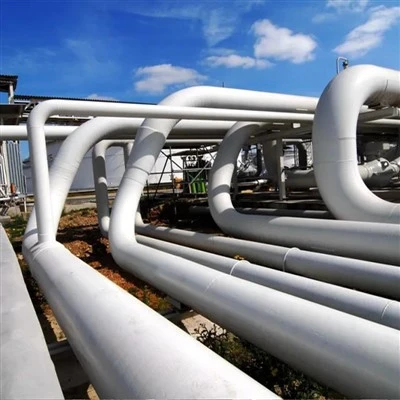
As a pipeline supplier, our job isn’t just to lay pipe—it’s to ensure that the gas moving through it meets all these quality requirements every single day, for the life of the pipeline. That means ongoing testing, regular maintenance of dehydration and filtering systems, and adapting to new regulations as they come out. If you’re a pipeline operator, energy producer, or end user who’s working on a project that involves gas transport, and you want to make sure your pipeline meets all necessary quality standards to stay safe, efficient, and compliant, I’d encourage you to reach out to discuss your specific needs. Whether you’re building a traditional natural gas line, a low-carbon biomethane or hydrogen pipeline, or anything in between, we can partner with you to design a system that meets all gas quality requirements while fitting your project’s goals.
Purification System References:
API Spec 1160, American Petroleum Institute, 2020, Specification for Gas Transmission and Distribution Piping Systems
API 521, American Petroleum Institute, 2021, Guide for Pressure-Relieving and Depressurizing Systems
ISO 13686:2019, International Organization for Standardization, Natural Gas – Delivery Requirements for Quantities and Quality
ISO 14165:2015, International Organization for Standardization, Natural Gas – Determination of Particulate Matter
ISO 15916:2020, International Organization for Standardization, Hydrogen For Use In Industrial Applications – General Requirements
EN 16723-1:2020, European Committee for Standardization, Natural Gas and Biomethane for Injection Into the Natural Gas Network – Part 1: Quality of Natural Gas
EN 16723-2:2020, European Committee for Standardization, Natural Gas and Biomethane for Injection Into the Natural Gas Network – Part 2: Quality of Biomethane
Xinxiang Jiale Intelligent Equipment Co., Ltd.
As one of the most professional gas transport pipelines manufacturers and suppliers in China, we’re featured by quality products and good service. Please rest assured to buy durable gas transport pipelines for sale here from our factory. We also accept customized orders.
Address: No.3913, 9th Floor, Unit 3, East Commercial and Office Complex, Baolong City Plaza, Hongqi District, Xinxiang City, Henan Province, China
E-mail: cc2397410@gmail.com
WebSite: https://www.jiale-asu.com/
