If you walk through a modern automotive production plant, there’s a quiet, invisible backbone keeping every component, every vehicle, every step of the assembly process accountable: product traceability. For suppliers like me—who design, build, and customize the production equipment that lines those plants—this isn’t just a buzzword or a compliance box to tick. It’s the core of what our equipment does, day in and day out, turning raw parts into traceable, reliable vehicles that can be recalled, tracked, and verified back to their very first material source. Today, I want to pull back the curtain on how our automotive production equipment powers that traceability, straight from the desk of someone who’s been engineering these systems for 18 years. Automotive Industry Production Equipment
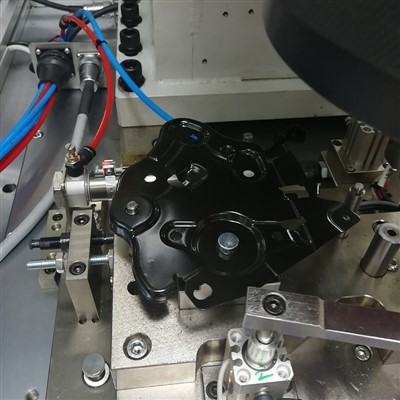
It started small, back in 2005, when I was a junior engineer on a line producing compact sedans. Back then, traceability was mostly paper-based: each part had a barcode sticker, line workers logged batches in a spiral notebook, and if a brake line failed, the team would spend days cross-referencing notebooks, repair tickets, and part manifests to find the root cause. That system worked… until it didn’t. A faulty throttle body from a single batch led to a $20 million recall, not because the parts were bad, but because the plant couldn’t pinpoint exactly which vehicles had those specific parts fast enough to avoid a safety risk. That failure stuck with me, and it’s why every piece of equipment we build now is engineered first for traceability, then for speed, accuracy, or cost savings.
Let’s start with the foundation: integrated data capture tools, baked directly into every station of the production line. Our equipment isn’t just a machine that bolts doors or torques axles—it’s a data-gathering node, built to capture a timestamp, operator ID, part serial number, and equipment calibration data every time a task is completed. For example, take our wheel-torque assembly station, one of our most popular standard lines. Instead of a human writing down how tight each lug nut is, the station’s torque wrench is connected to our in-house developed traceability module. When the wrench tightens a lug to 110 foot-pounds, it sends a data packet that includes: the vehicle’s unique VIN (Vehicle Identification Number), the serial number of the torque wrench used, the serial number of the lug nut and wheel assembly, the exact torque value, the timestamp, and even the ID of the technician operating the wrench. That data is sent wirelessly to the plant’s cloud-based manufacturing execution system (MES) in real time. No lost notebooks, no misread barcodes, no human error.
Wait, I know what some old-school plant managers say: “Why add all this complexity when barcode scanners work?” Barcodes are great, but they can be damaged, smudged, or scanned incorrectly, and they only hold so much data. Our equipment uses a mix of 2D Data Matrix codes and RFID (Radio Frequency Identification) tags depending on the part. For small, high-risk parts like airbag sensors, we embed tiny RFID tags into the plastic housing during injection molding—something our molding press systems are custom-built to handle. That way, even if a part’s surface is scratched during shipping, the RFID tag is still readable, and it can hold 10 times more data than a barcode: the part’s material lot number, the factory it was made in, the date of production, and even which specific mold was used to make it. For large parts like door panels, we etch a Data Matrix code directly onto the component during stamping, so the code is part of the part itself, not a sticker that can fall off mid-assembly.
The next piece is process validation, which is where our equipment stops just gathering data and starts ensuring that traceability is actually accurate. For instance, our engine assembly stations don’t just torque bolts—they verify that the torque was applied within the correct range, and if it wasn’t, they automatically stop the line. If a technician uses the wrong serial number for a piston, the station won’t let them proceed until they scan the correct code. This isn’t just about quality control; it’s about creating an unbroken audit trail. If there’s ever a question about whether a specific task was done correctly, we can pull up the exact timestamp, equipment ID, operator, and part data in 10 seconds, not 10 days. I’ve seen this pay off firsthand: a client had a minor issue with a batch of brake pads last year, and they used our equipment’s traceability data to pull only the 127 vehicles with those specific pads, instead of recalling 1,200 vehicles that were fine. That saved them millions in unnecessary costs, and it’s exactly what traceability is supposed to do: keep vehicles safe without wasting resources.
A big part of what makes our equipment different is its ability to integrate with a plant’s existing systems—no one wants to rip out their entire MES to add better traceability. Our team has spent years building standardized application programming interfaces (APIs) that work with every major automotive MES, from Siemens to SAP to in-house systems, so our equipment can talk directly to a plant’s data hub. That means when a part is delivered to the line, our material handling systems (another product line we offer) scan the part’s code, confirm that it’s the right part for the VIN, and log it in the system before it even reaches the assembly station. If a part is recalled by its supplier, our system can alert the plant within minutes, not hours, by cross-referencing the supplier’s part lot with the data we’ve captured. I like to compare it to a GPS for every part in the vehicle: you can track it from the raw steel mill that made its frame, to the tire plant, to the assembly line, to the dealer lot, and even to the end customer, if needed.
One of the most underrated parts of our traceability-focused equipment is its offline validation feature. A lot of plant managers worry that adding traceability tools will slow down production, but we designed our systems to test their own data integrity during downtime. Every night, when the line is shut down, our equipment runs a self-check: it verifies that all data from the day’s production is correctly stored in the MES, that barcode and RFID scanners are working at 100% accuracy, and that torque or pressure data is within calibration limits. If there’s a gap, the equipment flags it for maintenance before the line starts up in the morning. That means no lost data, no slowdowns during shift, and a traceability trail that’s always complete. I’ve seen lines that added our traceability equipment actually increase their overall efficiency by 3% because reduced rework from incorrect parts or assembly tasks, and faster resolution of quality issues.
Of course, traceability isn’t just for recalls—it’s also for continuous improvement. Our equipment captures data on every part and every task, so plants can spot trends. For example, if a specific mold for door handles has a higher defect rate, our equipment’s data will show that every door handle from that mold has a certain trace code, so the plant can catch the issue before it leads to a bad vehicle. Or if a technician’s torque wrench is consistently off by 5 foot-pounds, the system will flag that, so the wrench can be recalibrated, reducing errors. That’s the beauty of traceability: it turns raw production data into actionable insights, not just a way to track problems after they happen.
I’ve worked with plants across North America, Europe, and Asia, and one thing is universal: customers don’t care about our equipment’s technical specs as much as they care about whether that equipment can help them keep their customers safe, comply with global regulations (like ISO/TS 16949 or China’s GB/T traceability standards for automotive), and reduce their risk. That’s why we don’t sell “traceability add-ons” after the fact—we build traceability into every piece of equipment we design, from our robotic welding arms to our final vehicle test stations. When a client works with us, we don’t just deliver a machine; we deliver a complete traceability package that’s tailored to their specific line, their vehicles, and their goals.
I’ll be honest, it’s not always easy. The automotive industry is moving fast—electric vehicles, autonomous features, new battery technology, all of which bring new traceability challenges. EVs have high-voltage battery packs made up of hundreds of individual cells, each of which needs to be traceable back to its lithium mine. That’s a whole new level of detail, and our engineering team is already working on new equipment that can track every single cell in a battery pack, down to its material origin. The next big hurdle is end-to-end traceability, where a customer can type in their VIN and see every component that went into their car, where it was made, and who worked on it. We’re already testing that with a few pilot clients, and it’s going to change how the industry operates.
If you’re an automotive production manager or engineer looking to upgrade your line’s traceability, let’s talk. We don’t believe in one-size-fits-all solutions, so we’ll sit down with you to map out your current process, your pain points, and your goals, then design equipment that fits your needs, not ours. Whether you’re building ICE vehicles, EVs, or a mix, our traceability-focused equipment can help you stay compliant, reduce risk, and build better, more reliable vehicles.
For more information on how our production equipment supports automotive product traceability, or to discuss custom solutions for your line, reach out to our team for a no-obligation consultation.
Automotive Industry Production Equipment References
- International Organization for Standardization. (2018). ISO/TS 16949:2018, Quality management systems – Particular requirements for the application of ISO 9001:2015 for automotive production and relevant service part organizations.
- Automotive Industry Action Group (AIAG). (2021). Product Traceability Framework for Automotive Manufacturing, 2nd Edition.
- U.S. National Highway Traffic Safety Administration (NHTSA). (2022). Advanced Recall Tracking and Traceability Standards for Light-Duty Vehicles.
- Siemens Industry. (2023). Manufacturing Execution Systems (MES) for Automotive Traceability: Capabilities and Implementation Guidelines.
- Society of Automotive Engineers (SAE) International. (2022). Traceability Requirements for Electric Vehicle Battery Supply Chains.
Shanghai Zenyan Automation Engineering Co., Ltd.
As one of the leading automotive industry production equipment manufacturers in China, we warmly welcome you to buy advanced automotive industry production equipment made in China here from our factory. All customized machines are with high quality and low price. Contact us for quotation.
Address: 3rd Floor, Building A, No.5629 Beisong Road, Chedun Town, Songjiang District, Shanghai, China
E-mail: zenyan_sh@163.com
WebSite: https://www.zenyanauto.com/
