When it comes to vehicle safety, seat belts play a crucial role. Among the various types of seat belts available in the market, the 2-point seat belt and the 3-point seat belt are two commonly discussed options. As a supplier of 2-point seat belts, I’ve encountered numerous inquiries about the differences between these two types of safety restraints. In this blog, I’ll delve into the details to help you understand what sets them apart. 2 Point Seat Belt
Design and Structure
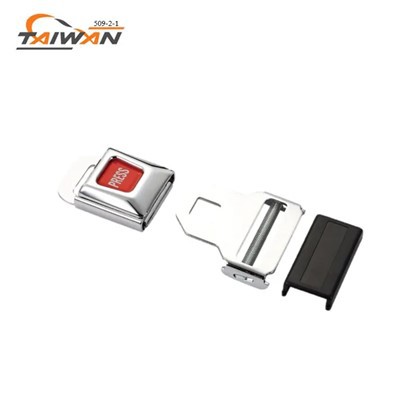
The most obvious difference between a 2-point seat belt and a 3-point seat belt lies in their design. A 2-point seat belt, as the name implies, has only two attachment points. It typically consists of a single strap that secures across the lap area only. This design is relatively simple and straightforward. The strap is fastened at two ends, one on each side of the seat, and it buckles in the middle, usually at the center of the body.
On the other hand, a 3-point seat belt has three attachment points. It combines a lap belt and a shoulder belt into one unit. The lap portion of the 3-point seat belt functions similarly to a 2-point seat belt, securing across the hips. However, it also has an additional shoulder strap that runs diagonally across the chest from the outside shoulder to the hip on the opposite side. This shoulder strap is attached to a third point, usually located above the seat or on the side of the vehicle’s body.
How They Work
The way these seat belts work to protect passengers during a collision is also quite different. A 2-point seat belt is primarily designed to prevent the occupant from sliding forward out of the seat. In the event of a sudden stop or a frontal collision, the lap belt restrains the lower body, holding the passenger in place and reducing the risk of being ejected from the vehicle. However, it does not provide any restraint for the upper body.
This limited protection means that during a crash, the upper body can still move forward unrestrained. The head and chest can strike the dashboard, steering wheel, or windshield, leading to serious injuries such as head trauma, chest fractures, and neck injuries. The lack of upper body restraint also increases the risk of submarining, where the occupant slides forward under the lap belt, which can cause severe abdominal and pelvic injuries.
In contrast, a 3-point seat belt provides more comprehensive protection. The lap portion restrains the lower body, preventing forward movement and ejection, while the shoulder strap restrains the upper body. When a collision occurs, the shoulder belt helps to distribute the forces of the impact across a larger area of the body, reducing the stress on any one particular area. This significantly reduces the risk of upper body injuries, such as chest and head trauma. The combination of the lap and shoulder belts also helps to keep the occupant in an upright position, minimizing the chances of submarining.
Usage and Applications
The usage and applications of 2-point and 3-point seat belts vary depending on the type of vehicle and the specific requirements. 2-point seat belts are commonly found in some older vehicles, especially in the rear seats. They are also used in certain types of specialized vehicles, such as tractors, forklifts, and some off-road vehicles. In these applications, the focus is often on keeping the operator or passenger from falling out of the seat rather than providing the highest level of crash protection.
For example, in a tractor, the operator needs to be able to move around slightly while sitting in the seat to operate the controls. A 2-point seat belt provides enough restraint to keep the operator in place during normal operation and in case of sudden movements, but it doesn’t restrict movement as much as a 3-point seat belt.
3-point seat belts, on the other hand, are the standard safety restraint in most modern passenger vehicles. They are required by law in many countries for all seating positions in cars, trucks, and buses. The widespread use of 3-point seat belts is due to their superior safety performance. They are designed to protect occupants in a variety of crash scenarios, including frontal, rear, and side impacts.
Safety Ratings and Effectiveness
Numerous studies have been conducted to evaluate the safety effectiveness of 2-point and 3-point seat belts. These studies consistently show that 3-point seat belts offer significantly better protection than 2-point seat belts. According to research, the use of a 3-point seat belt can reduce the risk of fatal injury in a frontal collision by up to 50% and the risk of serious injury by up to 60%.
In contrast, 2-point seat belts are less effective at preventing serious injuries. While they do provide some level of protection by keeping the occupant in the seat, the lack of upper body restraint means that the risk of head, chest, and neck injuries remains relatively high. In frontal collisions, occupants wearing only 2-point seat belts are more likely to suffer from severe abdominal and pelvic injuries due to the potential for submarining.
Advantages of 2-Point Seat Belts
Despite their limitations in terms of crash protection, 2-point seat belts do have some advantages in certain situations. One of the main advantages is their simplicity. The design of a 2-point seat belt is relatively straightforward, which makes it easier to install and use. This simplicity also means that they are generally less expensive to manufacture than 3-point seat belts.
In addition, 2-point seat belts offer more freedom of movement compared to 3-point seat belts. This can be beneficial in situations where the occupant needs to be able to move around frequently, such as in a work vehicle. For example, a forklift operator may need to reach for controls or turn around to see behind them while wearing a seat belt. A 2-point seat belt allows for this type of movement without the restriction of a shoulder strap.
Why Choose Our 2-Point Seat Belts
As a supplier of 2-point seat belts, we take pride in offering high – quality products. Our seat belts are manufactured using the latest technology and the finest materials to ensure durability and reliability. We understand that different applications have different requirements, so we offer a variety of 2-point seat belts to meet the needs of various industries.

Our seat belts undergo rigorous testing to meet and exceed industry standards. Whether you need a 2-point seat belt for an industrial vehicle, an agricultural machine, or a classic car restoration project, we have the right solution for you. Our products are designed to provide the necessary restraint while also being comfortable for the user.
Contact Us for Your Seat Belt Needs
5 Point Racing Harness If you’re in the market for 2-point seat belts, we invite you to get in touch with us. Our team of experts is on hand to discuss your specific requirements and provide you with the best possible solution. We can offer competitive pricing, excellent customer service, and prompt delivery. Whether you’re a small business or a large corporation, we’re committed to meeting your seat belt needs. Don’t hesitate to reach out to us to start a conversation about your purchase.
References
- National Highway Traffic Safety Administration (NHTSA): Various reports on seat belt effectiveness and safety regulations.
- Insurance Institute for Highway Safety (IIHS): Studies on crashworthiness and seat belt performance in different vehicle types.
- Society of Automotive Engineers (SAE): Technical standards and research related to vehicle safety restraints.
Good Success Corp.
Good Success Corp. is one of the leading 2 point seat belt manufacturers and suppliers in China. We warmly welcome you to buy cheap 2 point seat belt for sale here from our factory. All customized products are with high quality and competitive price. Contact us for more details.
Address: NO.54, CHANG MA ROAD, CHANG HUA 500051, TAIWAN, R.O.C.
E-mail: sales@gscbelt.com
WebSite: https://www.gscseatbelt.com/
